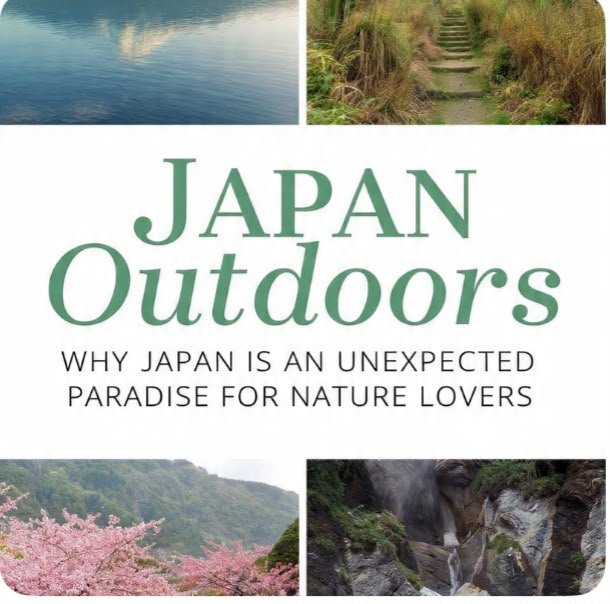
Japan Outdoors: Why Japan Is an Unexpected Paradise for Nature Lovers
What comes to mind when you picture Japan—neon streets, bullet trains, ancient temples, sushi, and crowded city crossings? Those famous attractions are only one side of the country. Japan outdoors offers an extraordinary mix of mountains, forests, volcanoes, coastlines, waterfalls, wetlands, islands, rivers, beaches, and snow-covered landscapes, making it one of the most diverse outdoor destinations in Asia Tarnplanen
Whether you want an easy nature walk near Tokyo, a challenging mountain trek, a peaceful forest experience, a cycling adventure, a beach escape, or a winter sports trip, Japan has outdoor experiences for almost every travel style and fitness level. Japan’s mountainous geography is a major reason for this variety: official tourism information notes that a large share of the country is mountainous, while its national parks protect landscapes ranging from alpine peaks and volcanoes to subtropical coastlines.
The best part is that outdoor Japan does not require you to abandon comfort completely.
You can hike through an ancient forest in the morning, soak in a traditional hot spring in the afternoon, and enjoy a carefully prepared Japanese dinner in the evening. You can travel to remote islands for dramatic coastal scenery or take a short train journey from a major city and suddenly find yourself surrounded by mountains.
That combination of accessibility, natural diversity, cultural depth, seasonal beauty, and excellent infrastructure is what makes Japan outdoors different from many conventional adventure destinations.
What Does Japan Outdoors Actually Include?
Japan outdoors is much broader than hiking.
For some travelers, it means climbing a mountain. For others, it means walking beneath cherry blossoms, cycling through rural villages, kayaking along a quiet river, skiing in Hokkaido, exploring a volcanic landscape, snorkeling in Okinawa, or simply sitting beside a forest stream.
Japan’s official tourism resources highlight activities including hiking, camping, cycling, water sports, skiing, wildlife experiences, guided adventures, rafting, kayaking, and other outdoor activities.
The country’s geography makes this possible.
Japan stretches across a long north-south distance, so climate and landscape can change dramatically between regions. Hokkaido can offer deep winter snow while Okinawa provides subtropical beaches. The Japanese Alps create high-altitude mountain environments, while coastal areas offer sea kayaking, diving, surfing, and island exploration.
This means there is no single “best” Japan outdoor experience.
There is only the experience that matches your interests, ability, season, budget, and available time.
Why Japan Is So Good for Outdoor Travel
A Mountainous Country With Extraordinary Variety
Mountains dominate much of Japan’s landscape. Official JNTO information describes Japan as a country where mountains run throughout the archipelago, ranging from relatively low hills to high peaks.
This creates an enormous variety of hiking possibilities.
A beginner can choose a gentle forest trail.
An intermediate hiker can tackle a long mountain route.
An experienced mountaineer can attempt demanding alpine terrain.
And someone who does not want to hike at all can often enjoy the scenery using ropeways, cable cars, buses, scenic trains, or accessible walking paths.
Four Distinct Seasons
Japan’s outdoor appeal changes dramatically throughout the year.
Spring brings fresh greenery, flowers, cherry blossoms, and comfortable hiking conditions in many regions.
Summer opens higher mountain areas and provides excellent opportunities for alpine hiking, camping, rafting, kayaking, and water-based adventures.
Autumn is famous for brilliant foliage, particularly in mountain and forest regions.
Winter transforms northern Japan and higher elevations into a destination for skiing, snowboarding, snowshoeing, winter hiking, and other snow experiences.
This seasonal variety is one reason travelers can return to Japan multiple times without having the same outdoor experience twice.
Nature and Culture Often Share the Same Trail
One of the most interesting things about Japan outdoors is the relationship between nature and culture.
A trail may lead through a forest and eventually reach a shrine.
A pilgrimage route may pass through rural villages.
A mountain may have religious significance.
A traditional hot spring town may sit at the entrance to a hiking region.
The Kumano Kodo is an excellent example. The historic pilgrimage routes connect natural landscapes with religious and cultural traditions, and visitors can choose between shorter walks and multi-day journeys.
This makes outdoor travel in Japan more than physical recreation.
It can become a cultural journey.
Best Japan Outdoor Experiences for Travelers
Hiking in Japan
Hiking is arguably the most accessible way to experience Japan’s natural landscape.
The country has trails for different abilities, from short walks to demanding multi-day mountain routes. Official tourism guidance emphasizes that trail difficulty varies considerably, so travelers should select routes according to fitness, experience, weather, and equipment.
Popular hiking environments include:
- Mountain forests
- Volcanic landscapes
- Alpine peaks
- Wetlands
- Coastal paths
- Sacred pilgrimage routes
- Island trails
- River valleys
- National parks
- Rural countryside
For first-time visitors, a short day hike is often a better introduction than immediately attempting a famous summit.
Mount Takao Near Tokyo
Mount Takao is one of the easiest ways to combine city travel with outdoor adventure.
Its location makes it especially attractive to travelers staying in Tokyo who do not have time for a long trip into the countryside.
Different routes provide different experiences, and the mountain can be approached as either a relatively easy nature outing or a more active hike.
The major advantage is convenience.
You can spend the morning in Tokyo’s urban environment and later enjoy forested trails and mountain scenery without committing to a multi-day expedition.
JNTO specifically highlights Mount Takao as an accessible hiking destination from central Tokyo.
Mount Mitake
Mount Mitake offers another outdoor escape within the wider Tokyo region.
The area combines forests, streams, waterfalls, mountain paths, and cultural attractions.
It is particularly interesting for travelers who want something more immersive than a simple urban park but do not want to travel several hours from Tokyo.
The journey itself becomes part of the adventure.
Mount Fuji
Mount Fuji is Japan’s most iconic mountain and one of the world’s most recognizable volcanic landscapes.
Climbing it is an entirely different experience from simply viewing it.
Travelers should not assume that because Mount Fuji is famous, climbing it is easy.
Altitude, weather, steep terrain, crowds, temperature changes, and timing can all affect the experience.
The key lesson is simple:
Treat Mount Fuji as a serious mountain hike rather than a sightseeing attraction.
Check current trail conditions and official opening information before planning a climb.
Kamikochi
Kamikochi in the Japanese Alps is one of Japan’s classic mountain destinations.
It is especially attractive for travelers who want dramatic scenery without necessarily committing to a highly technical climb.
Mountain peaks, rivers, forests, bridges, and valley landscapes create a spectacular setting for walking.
The area is particularly beautiful during autumn, when foliage transforms the surrounding mountains.
Daisetsuzan in Hokkaido
Daisetsuzan offers a very different outdoor experience.
Located in Hokkaido, the region is known for broad mountain landscapes, volcanic terrain, alpine environments, and dramatic seasonal changes.
Summer is an important hiking period, while winter turns the wider region into a snow-focused destination.
The scale can feel much wilder than popular day hikes around Tokyo.
Yakushima
Yakushima is one of Japan’s most remarkable nature destinations.
The island is famous for ancient cedar forests, mountainous terrain, heavy rainfall, rivers, and biodiversity.
Its forests create an almost prehistoric atmosphere.
For travelers interested in forest hiking rather than simply mountain summits, Yakushima can be one of the most rewarding choices in Japan.
Some routes are relatively accessible, while others require much greater fitness and preparation.
Kumano Kodo
The Kumano Kodo is ideal for travelers who want an outdoor experience with cultural meaning.
Rather than viewing hiking as simply exercise, the pilgrimage routes connect forests, villages, shrines, and centuries of Japanese religious history.
A multi-day itinerary can be physically demanding, but shorter sections make the experience more approachable.
This is a good example of Japan’s ability to combine adventure, history, spirituality, and landscape in a single journey.
Japan National Parks for Outdoor Adventures
Japan’s national parks are among the country’s most important outdoor assets.
Japan’s official national park platform currently presents 35 national parks, covering a broad range of environments and outdoor experiences.
These protected areas include:
- High mountains
- Volcanoes
- Forests
- Wetlands
- Islands
- Coral reefs
- Coastal landscapes
- Lakes
- Waterfalls
- Wildlife habitats
The diversity means travelers should not think of “a Japanese national park” as one particular type of destination.
Each region can feel completely different.
Chubu-Sangaku National Park
This park is associated with the Japanese Alps and provides opportunities for both easier mountain experiences and serious alpine trekking.
The area around Kamikochi is particularly well known.
Experienced hikers can venture deeper into the mountains, while less experienced visitors can enjoy valley walks.
Fuji-Hakone-Izu National Park
This is an excellent choice for travelers who want to combine outdoor scenery with popular tourist destinations.
Mount Fuji, Hakone, lakes, volcanic landscapes, and coastal areas create a diverse outdoor environment.
It also demonstrates an important advantage of Japan: nature experiences can often be combined with cultural and urban travel.
Nikko National Park
Nikko combines forests, mountains, lakes, waterfalls, and cultural landmarks.
This makes it particularly useful for first-time visitors who want an outdoor destination that does not feel completely disconnected from conventional sightseeing.
Oze National Park
Oze is especially interesting for travelers who want wetlands rather than mountain summits.
Wooden boardwalks cross marshland and provide a completely different type of hiking experience.
The landscape changes significantly through the seasons, with spring vegetation and autumn colors creating very different visual experiences.
Yakushima National Park
Yakushima is ideal for travelers searching for ancient forests, dramatic mountains, waterfalls, and island wilderness.
Its remote character makes it feel substantially different from Tokyo or Kyoto.
Shiretoko National Park
Shiretoko, in eastern Hokkaido, is a strong choice for travelers interested in wilderness and wildlife.
It is important to remember that wilderness means wildlife considerations as well as beautiful scenery.
Visitors should follow local guidance and never approach wild animals.
Japan Outdoors Beyond Hiking
Cycling in Japan
Cycling is one of the best ways to experience rural Japan.
A train journey takes you efficiently from one destination to another.
A bicycle slows everything down.
You notice:
- Small farms
- Local shops
- Rivers
- Rice fields
- Coastal villages
- Traditional homes
- Mountain roads
- Local food
- Rural shrines
Cycling can range from relaxed recreational rides to serious long-distance routes.
The famous Shimanami Kaido, for example, provides a distinctive island-hopping cycling experience across the Seto Inland Sea region.
Kayaking
Japan’s rivers, lakes, coastal areas, and island environments create opportunities for kayaking.
Hokkaido, Nagano, Okinawa, and other regions offer different forms of paddling.
Beginners should consider guided tours rather than attempting unfamiliar rivers independently.
River conditions can change quickly after rainfall.
Rafting
Japan’s mountainous terrain produces rivers suitable for rafting.
Areas such as Nagano and Tokushima are associated with outdoor river activities.
Rafting can be a good choice for travelers who want an adrenaline-focused experience without having to organize complex equipment themselves.
Surfing
Japan is surrounded by ocean, so it should come as no surprise that surfing has a place in its outdoor culture.
Different coastal regions offer different wave conditions and atmospheres.
The best destination depends heavily on season, swell, skill level, and weather.
Diving and Snorkeling
Okinawa is particularly attractive for travelers interested in marine activities.
Warm waters, islands, reefs, and clear coastal environments provide a completely different perspective on Japan.
This is an important reminder that “Japan outdoors” should not be limited to mountains.
Japan is also an ocean destination.
Skiing and Snowboarding
Winter dramatically changes Japan’s outdoor identity.
Hokkaido and mountain regions of Honshu are internationally known for skiing and snowboarding.
Niseko, Hakuba, Nozawa Onsen, and other destinations attract winter sports travelers from around the world.
The appeal goes beyond skiing.
A winter trip can combine:
- Snowboarding
- Skiing
- Snowshoeing
- Hot springs
- Japanese food
- Traditional villages
- Winter photography
This combination makes Japan especially attractive to travelers who want an outdoor trip without giving up cultural experiences.
Canyoning
Canyoning combines hiking, scrambling, water, rock, and sometimes rappelling.
It is best done with professional operators, especially for international travelers unfamiliar with local terrain.
Nagano and other mountainous areas offer canyoning opportunities.
Forest Bathing
Forest bathing, often associated with the Japanese concept of shinrin-yoku, is another way to experience Japan outdoors.
It is not about speed.
It is about slowing down.
A forest walk can become an intentional sensory experience:
- Listen to birds.
- Notice the sound of water.
- Smell the trees.
- Observe changing light.
- Walk without rushing.
- Take breaks.
This is particularly appealing to travelers who find traditional adventure tourism too intense.
Best Places in Japan for Different Types of Outdoor Travelers
Best for Beginners
Consider:
- Mount Takao
- Nikko
- Hakone
- Oze
- Easy sections of Kumano Kodo
- Accessible trails around major national parks
Beginners should prioritize well-marked routes, reasonable distances, good weather, transportation access, and reliable information.
Best for Families
Families may prefer:
- Nature parks
- Short forest trails
- Lakeside walks
- Ropeway-accessible mountains
- Easy cycling routes
- Wildlife observation areas
- Beaches
- Scenic parks
A family outdoor trip does not need to involve a difficult summit.
Best for Serious Hikers
More experienced hikers can investigate:
- Japanese Alps
- Daisetsuzan
- Mount Fuji
- Mount Yakedake
- Mount Hotaka
- Mount Kita
- Long-distance pilgrimage routes
Difficulty varies significantly, so always check current trail conditions.
Best for Adventure Travelers
Adventure travelers may prefer:
- Rafting
- Canyoning
- Backcountry skiing
- Sea kayaking
- Mountain trekking
- Diving
- Surfing
- Multi-day hiking
Best for Slow Travelers
Slow travelers should consider:
- Kumano Kodo
- Yakushima
- Rural cycling
- Forest walks
- Mountain villages
- Hot spring towns
- Lakeside trails
- Satoyama landscapes
The goal is not to see the most places.
It is to experience fewer places more deeply.
Best Seasons for Japan Outdoors
Spring
Spring is excellent for lower-elevation hiking, gardens, forests, and countryside exploration.
However, cherry blossom season is highly regional and weather-dependent.
Do not assume every part of Japan blooms at the same time.
Summer
Summer opens many high mountain areas that remain inaccessible or dangerous during winter.
It is also a strong period for:
- Alpine hiking
- Water sports
- Camping
- Island travel
- Cycling
Higher elevations can remain surprisingly cool.
Weather can also change quickly in the mountains. JNTO specifically warns hikers to prepare for sudden weather changes, including storms and cold conditions at altitude.
Autumn
Autumn may be the most visually rewarding season for many outdoor travelers.
Mountain forests turn shades of yellow, orange, and red.
But popularity also increases.
Popular foliage destinations can become crowded, especially on weekends.
Winter
Winter is ideal for:
- Skiing
- Snowboarding
- Snowshoeing
- Winter photography
- Snow festivals
- Hot springs
- Snow-covered villages
Winter hiking requires a much higher level of preparation than ordinary three-season hiking.
How to Plan a Japan Outdoor Trip
Choose the Experience Before Choosing the Destination
Do not start with:
“I am going to Japan, so where should I go?”
Start with:
“I want to hike, ski, cycle, kayak, photograph wildlife, relax in forests, or explore the coast.”
Then choose the region.
This simple change can dramatically improve your itinerary.
Check Seasonal Accessibility
Some mountain roads, trails, huts, and facilities close seasonally.
A trail that is perfect in summer may be covered in snow in winter.
A mountain hut may also be closed outside its operating period.
Never assume that a trail is available year-round simply because it appears on a travel website.
Research Transportation
One of Japan’s greatest outdoor advantages is transportation access.
Many hiking areas can be reached by train and bus.
But “accessible by public transportation” does not mean “easy.”
A route may require:
- Train
- Local bus
- Cable car
- Shuttle
- Walking
- Advance reservation
Study the entire journey rather than only the hiking route.
Download Maps Before Leaving
Mountain connectivity should never be your only navigation plan.
Carry offline maps where appropriate.
Know:
- Trailhead location
- Route distance
- Elevation
- Exit points
- Emergency facilities
- Water sources
- Hut locations
- Transportation schedules
Check Weather at the Mountain, Not Just the City
Tokyo weather is irrelevant if you are hiking at high altitude several hours away.
Mountain weather can change quickly.
Before departure, check regional and mountain forecasts.
What to Pack for Japan Outdoor Adventures
Basic Day-Hike Kit
A basic day-hike setup may include:
- Comfortable hiking shoes
- Small backpack
- Water
- Food or snacks
- Rain jacket
- Extra layer
- Navigation device or map
- Phone
- Portable battery
- First-aid supplies
- Sun protection
- Headlamp
- Small garbage bag
JNTO’s hiking guidance similarly recommends appropriate footwear, clothing, rain gear, navigation equipment, lighting, water, food, first-aid supplies, and other practical essentials.
Clothing
Layering is usually more useful than carrying one extremely warm item.
A practical system can include:
- Moisture-managing base layer
- Insulating mid-layer
- Waterproof or wind-resistant outer layer
Adjust the system to altitude and season.
Hiking Boots vs Trail Shoes
For easy trails, trail shoes may be enough.
For rocky, steep, wet, or technical terrain, sturdier footwear may provide more protection and stability.
Do not buy expensive boots simply because a route is called a mountain hike.
Choose footwear based on terrain.
Trekking Poles
Trekking poles can be useful on:
- Long descents
- Muddy trails
- Uneven terrain
- Steep routes
- Multi-day hikes
They can reduce some of the physical stress associated with descending.
Japan Outdoor Safety
Weather Is a Major Consideration
Mountain weather can be unpredictable.
Rain can turn a comfortable trail into a slippery route.
Fog can reduce visibility.
Storms can make exposed ridges dangerous.
Cold temperatures can occur at elevation even when cities are warm.
Plan conservatively.
Wildlife Awareness
Japan’s forests are home to wildlife, including bears in some regions.
Official national park guidance emphasizes that visitors may enter active bear habitats and should understand how to reduce encounter risks.
Depending on the region, hikers may use bear bells or other methods to make their presence known.
The important principle is not to panic about wildlife.
It is to respect it.
Do Not Approach Wild Animals
Wild animals are not attractions.
Do not:
- Feed them
- Chase them
- Touch them
- Photograph them at dangerously close range
- Block their escape route
This applies to monkeys, bears, deer, birds, and other wildlife.
Watch for Insects
Japan also has potentially dangerous insects, including large hornets.
Avoid disturbing nests.
If you see unusual insect activity around a tree, structure, or trail area, give it space.
Stay on Designated Trails
Going off-trail can cause several problems:
- Getting lost
- Damaging vegetation
- Increasing erosion
- Entering wildlife habitat
- Encountering unstable terrain
- Creating rescue difficulties
Japanese national park guidance emphasizes staying on designated routes and respecting protected environments.
Japan Outdoor Etiquette
Outdoor etiquette is just as important as equipment.
Carry Your Garbage Out
Do not assume that bins will be available on remote trails.
Bring a small garbage bag.
Take everything with you.
Do Not Pick Plants or Flowers
Even if a flower looks ordinary, it may be part of a protected ecosystem.
Photography is the better souvenir.
Respect Quiet Areas
Not every hiking trail is an appropriate place for loud music or large speakers.
Use headphones where appropriate and keep your voice reasonable.
Respect Local Communities
Many outdoor destinations are near villages.
Keep noise down.
Follow parking rules.
Do not block roads.
Respect private property.
Remember that the trail may pass through a community where people live and work.
Common Mistakes When Exploring Japan Outdoors
Mistake 1: Assuming Japan Is Easy Because Transportation Is Excellent
Japan’s trains are efficient.
Mountains are not.
A well-connected country does not automatically mean every trail is beginner-friendly.
Mistake 2: Choosing a Famous Destination Instead of the Right Destination
Mount Fuji may be iconic, but it may not be the best hike for your ability or schedule.
A less famous mountain may provide a better experience.
Mistake 3: Ignoring Elevation
A short trail can still be physically demanding if it climbs steeply.
Distance alone does not tell you how hard a hike will be.
Mistake 4: Carrying Too Little Water
Water availability varies.
Do not assume every trail has convenient refill stations.
Mistake 5: Depending Completely on Your Phone
Battery life can disappear quickly in cold weather.
Reception can be unreliable.
Carry backup navigation options.
Mistake 6: Ignoring Last Transportation
This is particularly important when using buses to reach trailheads.
Missing the final bus can transform a simple day hike into a serious logistical problem.
Mistake 7: Underestimating Darkness
Mountain areas become dark quickly.
A headlamp can be more useful than a phone flashlight.
Japan Outdoors for Budget Travelers
Outdoor travel does not have to be expensive.
Free or low-cost experiences include:
- Local hiking trails
- Public parks
- Forest walks
- Beach walks
- City-edge mountains
- Scenic viewpoints
- Rural cycling
- Free nature areas
Costs increase when you add:
- Guides
- Equipment rental
- Ski passes
- Mountain huts
- Specialized transportation
- Multi-day tours
One of the best strategies is to combine free outdoor activities with paid cultural experiences.
For example, you might spend the morning hiking a local trail and the afternoon visiting a paid museum or cultural attraction.
Japan Outdoors for Luxury Travelers
Luxury outdoor travel in Japan can be equally impressive.
Consider combining:
- Private guides
- Premium ryokan
- Scenic trains
- Private transfers
- Gourmet dining
- Hot springs
- Guided hiking
- Luxury ski resorts
The appeal is not simply expensive accommodation.
The real advantage is convenience.
A private guide can help you understand a landscape that you might otherwise experience only visually.
Japan Outdoors for Solo Travelers
Japan can be an excellent destination for solo outdoor travel, but the usual hiking principles still apply.
Tell someone your route when possible.
Carry appropriate equipment.
Avoid unnecessarily ambitious routes.
Check weather.
Know transportation schedules.
Do not let Japan’s reputation for safety encourage careless mountain behavior.
Urban convenience and wilderness safety are two different things.
Japan Outdoors for Couples
Outdoor travel can be particularly memorable for couples.
Consider:
- Forest walks
- Scenic cycling
- Lakeside hikes
- Hot springs
- Sunset viewpoints
- Coastal walks
- Snow trips
- Mountain villages
The best couples’ outdoor itinerary does not need to be physically extreme.
A beautiful walk followed by a hot spring can be more memorable than an exhausting summit.
Japan Outdoors for Families With Children
Families should focus on accessibility and engagement.
Choose routes with:
- Short distances
- Clear trails
- Frequent rest points
- Interesting scenery
- Transportation access
- Nearby food options
Children often enjoy outdoor experiences more when there is something to discover.
Waterfalls, bridges, animals, forests, trains, ropeways, and unusual landscapes can turn a simple walk into an adventure.
Japan Outdoor Brands: 10 Options Compared
Japan has a strong outdoor equipment culture, and travelers can find both Japanese and international brands across outdoor retailers.
The right brand depends on whether you prioritize technical performance, affordability, design, lightweight equipment, durability, or everyday versatility.
| Brand | Best Known For | Best For | General Positioning |
|---|---|---|---|
| Montbell | Outdoor clothing and equipment | Hiking, trekking, travel | Excellent value and technical range |
| Snow Peak | Camping and outdoor lifestyle | Camping, cooking, premium outdoor use | Premium |
| Goldwin | Technical apparel | Hiking, skiing, performance clothing | Premium technical |
| Nanga | Sleeping bags and outdoor apparel | Camping, cold-weather use | Mid-to-premium |
| and wander | Technical outdoor fashion | Hiking, urban-outdoor crossover | Premium/lifestyle |
| The North Face | Outdoor clothing and equipment | Hiking, travel, winter sports | Broad range |
| Patagonia | Outdoor clothing and sustainability | Hiking, climbing, travel | Premium |
| Arc’teryx | Technical mountain clothing | Serious hiking and alpine activities | High-end technical |
| Salomon | Footwear and trail equipment | Hiking, trail running | Performance |
| Columbia | Outdoor apparel and footwear | Beginners, casual hiking, travel | Accessible |
Montbell
Montbell is one of the most important names to know when shopping for outdoor equipment in Japan.
Its range covers clothing, backpacks, sleeping bags, footwear, rainwear, and technical mountain equipment.
It is particularly attractive to travelers who want serious outdoor functionality without automatically moving into the highest price categories.
Snow Peak
Snow Peak is strongly associated with Japanese outdoor lifestyle and camping culture.
Its appeal extends beyond basic functionality into design, cooking, camp furniture, and premium outdoor experiences.
It is especially relevant for travelers interested in Japanese-style camping.
Goldwin
Goldwin focuses heavily on performance-oriented clothing and technical outdoor apparel.
Its aesthetic is often cleaner and more understated than some mainstream outdoor brands.
It can appeal to travelers who want technical functionality without an overly rugged visual style.
Nanga
Nanga is particularly associated with sleeping bags and cold-weather equipment.
Its products are relevant for camping and travelers who need insulation for colder conditions.
and wander
and wander occupies an interesting space between technical outdoor equipment and fashion.
It is useful for travelers who want clothing that can transition between trails and urban environments.
The North Face
The North Face offers one of the broadest outdoor product ranges.
Its products cover hiking, camping, travel, winter sports, and casual outdoor use.
Patagonia
Patagonia is widely recognized for outdoor apparel and environmental positioning.
Its range is particularly useful for hiking, climbing, travel, and everyday outdoor clothing.
Arc’teryx
Arc’teryx is aimed toward travelers who prioritize technical mountain performance.
Its products often focus on sophisticated construction, weather protection, and mobility.
For casual travelers, the full technical specification may be unnecessary.
For serious mountain users, however, technical clothing can be worthwhile.
Salomon
Salomon is particularly strong in footwear and trail-oriented equipment.
Its trail shoes and hiking products are popular among people who want lightweight performance.
Columbia
Columbia is a useful option for beginners and casual outdoor travelers.
It provides a broad selection of hiking apparel, jackets, footwear, and accessories.
How to Choose Outdoor Gear for Japan
Do not choose equipment based solely on brand reputation.
Instead, ask:
What activity am I doing?
Then ask:
What weather will I face?
Then:
How remote is the route?
Finally:
How much weight am I willing to carry?
A traveler walking easy trails around Tokyo does not need the same equipment as someone crossing a high-altitude alpine route.
This is an important principle:
Buy for the actual adventure, not the imagined adventure.
A Simple Japan Outdoor Gear Strategy for Beginners
For most casual outdoor travelers, start with:
- Comfortable trail shoes
- Lightweight rain jacket
- Breathable layers
- Small backpack
- Reusable water bottle
- Portable battery
- Headlamp
- Basic first-aid kit
- Offline map
- Sun protection
Upgrade equipment only when your activities demand it.
Sustainable Japan Outdoors
Outdoor tourism can create pressure on the very landscapes that attract visitors.
The more popular a trail becomes, the more important responsible travel becomes.
Sustainable outdoor travel means:
- Staying on trails
- Carrying out garbage
- Avoiding wildlife disturbance
- Using public transportation where practical
- Respecting local communities
- Avoiding unnecessary single-use items
- Following park rules
- Supporting local businesses
- Using designated campsites
Japan’s national parks emphasize conservation alongside visitor access, and official park guidance encourages visitors to understand the natural environment and follow local rules.
The Hidden Advantage of Japan Outdoors: Public Transportation
One of Japan’s biggest outdoor advantages is the ability to combine transportation and nature.
In many countries, reaching a hiking trail requires a rental car.
In Japan, numerous outdoor destinations can be reached through trains, buses, ropeways, or a combination of public transportation.
This opens outdoor travel to visitors who cannot or do not want to drive.
However, planning remains important.
Remote buses may run infrequently.
Some services are seasonal.
Some routes require reservations.
Always check the latest transportation information before leaving.
A Better Way to Build a Japan Outdoor Itinerary
Instead of creating an itinerary based entirely on famous attractions, divide your trip into three layers.
Layer One: The City
Spend time in Tokyo, Kyoto, Osaka, or another major destination.
Layer Two: Accessible Nature
Add a nearby mountain, forest, lake, park, or countryside destination.
Layer Three: Deep Outdoor Experience
If time allows, spend two or more nights in a mountain, island, ski, or rural region.
This creates a balanced trip.
You get the energy of Japanese cities without missing the natural environment.
Example 7-Day Japan Outdoors Itinerary
Days 1–2: Tokyo
Explore the city while keeping one half-day available for an easy nature experience.
Mount Takao can be considered for travelers seeking a convenient hiking escape.
Day 3: Hakone or Nikko
Move toward a destination with mountains, lakes, forests, and cultural attractions.
Days 4–5: Mountain or Rural Region
Choose an area based on the season.
Summer travelers might favor alpine hiking.
Autumn travelers can prioritize foliage.
Winter travelers might choose snow activities.
Days 6–7: Cultural and Relaxation Days
Finish with:
- Hot springs
- Local food
- Traditional accommodation
- Temples
- Scenic walks
This prevents the trip from becoming physically exhausting.
Example 14-Day Japan Outdoor Itinerary
A longer trip allows you to combine several environments.
A possible framework could include:
- Tokyo
- Mount Takao
- Nikko
- Japanese Alps
- Kyoto
- Kumano Kodo
- Osaka
- Okinawa
This gives you urban, mountain, forest, cultural, and coastal experiences.
The exact route should be adapted to season and transportation.
Japan Outdoors and Google Discover-Friendly Travel Trends
Outdoor travel is increasingly moving away from simple “top 10 places” content.
Travelers increasingly want experiences that answer practical questions:
- Where can beginners hike?
- Which hikes are accessible without a car?
- What can you do in Japan in winter?
- Where can families experience nature?
- What are the best outdoor activities near Tokyo?
- Where can you see autumn foliage without extreme hiking?
- Which Japanese national parks are easiest to visit?
- What should international travelers pack?
- How can travelers experience rural Japan responsibly?
This creates an opportunity for more useful outdoor content.
Instead of simply publishing a list of destinations, explain who each destination is for, when to visit, how difficult it is, what it costs, what equipment is required, and what can go wrong.
That approach is more useful to readers and naturally creates stronger topical depth.
The Future of Japan Outdoors
Japan’s outdoor tourism is likely to become increasingly diverse.
Travelers are not only looking for famous landmarks.
They are searching for:
- Rural experiences
- Wellness
- Slow travel
- Nature immersion
- Sustainable tourism
- Adventure travel
- Outdoor photography
- Cycling
- Hiking
- Wildlife experiences
- Winter sports
- Local food combined with nature
This creates an opportunity for lesser-known destinations.
The future of Japan outdoor travel may not be about finding another famous mountain.
It may be about finding a better balance between visitor access and environmental protection.
More Interest in Lesser-Known Destinations
Popular destinations can experience crowding.
As travelers search for alternatives, smaller towns and less famous natural areas may benefit.
The challenge will be managing visitor growth without damaging the landscapes and communities that make these destinations attractive.
More Guided Outdoor Experiences
Guided experiences can help international travelers navigate language barriers, safety concerns, local customs, and technical activities.
This is especially useful for:
- Canyoning
- Rafting
- Backcountry skiing
- Wildlife tours
- Mountain trekking
- Diving
Outdoor Wellness
Forest bathing, hot springs, slow hiking, meditation, and nature retreats fit naturally into Japan’s existing cultural landscape.
This may become one of the strongest forms of nature tourism for travelers who are not traditional adventure athletes.
Pros and Cons of Japan Outdoor Travel
Pros
Japan offers an unusually strong combination of:
- Diverse landscapes
- Excellent transportation
- Seasonal variety
- Well-developed tourism infrastructure
- Cultural experiences
- National parks
- Mountain destinations
- Coastal environments
- Winter sports
- Food and hospitality
- Options for different fitness levels
Cons
Outdoor travel also has challenges.
These include:
- Unpredictable mountain weather
- Seasonal trail closures
- Language barriers in remote locations
- Crowding at famous destinations
- Limited transportation in rural areas
- Wildlife risks
- High costs for some specialized activities
- Difficult terrain on advanced routes
The solution is not avoiding Japan’s outdoors.
It is planning appropriately.
Is Japan Outdoors Suitable for Beginners?
Yes—but beginners should choose their route carefully.
Japan offers many accessible outdoor experiences, including short hikes, forest walks, scenic parks, easy cycling routes, and guided activities.
The mistake is assuming that every Japanese mountain is beginner-friendly.
Start small.
Build experience.
Then progress to longer and more demanding routes.
Is Japan Good for Outdoor Photography?
Absolutely.
Japan offers almost every major photographic landscape:
- Mountains
- Volcanoes
- Forests
- Waterfalls
- Lakes
- Beaches
- Snow
- Autumn foliage
- Wildflowers
- Rural villages
- Coastal cliffs
- Traditional architecture
The best photographic opportunities often occur during transitional light—early morning and late afternoon.
But remember that photography should not interfere with safety or other visitors.
Japan Outdoors vs Traditional City Tourism
A city-focused Japan trip shows you one side of the country.
An outdoor trip reveals another.
Cities show:
- Technology
- Architecture
- Food
- Shopping
- Pop culture
- Nightlife
Outdoor Japan shows:
- Mountains
- Forests
- Villages
- Wildlife
- Rivers
- Traditional landscapes
- Seasonal changes
- Rural culture
The strongest itinerary combines both.
20 Practical Tips for Japan Outdoor Travelers
- Check the season before choosing a trail.
- Research elevation, not just distance.
- Check weather shortly before departure.
- Carry rain protection.
- Bring enough water.
- Carry a headlamp.
- Use offline maps.
- Do not rely entirely on phone reception.
- Check the last train or bus.
- Reserve mountain huts when necessary.
- Stay on marked trails.
- Carry your garbage out.
- Do not feed wildlife.
- Use a bear bell where appropriate.
- Respect local communities.
- Wear suitable footwear.
- Do not underestimate altitude.
- Avoid ambitious routes in poor weather.
- Tell someone your route for serious hikes.
- Leave enough time to finish before dark.
Frequently Asked Questions About Japan Outdoors
What are the best outdoor activities in Japan?
The best outdoor activities depend on the region and season. Popular choices include hiking, trekking, cycling, skiing, snowboarding, kayaking, rafting, surfing, diving, camping, canyoning, wildlife watching, and forest walks.
Is Japan good for hiking?
Yes. Japan is particularly strong for hiking because of its mountainous geography, varied climates, national parks, established trails, and access to nature from major cities. Official tourism resources describe hiking options ranging from easy walks to demanding multi-day mountain routes.
What is the best place for hiking near Tokyo?
Mount Takao is one of the most convenient options for travelers staying in Tokyo. Mount Mitake and other western Tokyo mountain areas can also provide more immersive nature experiences.
Is Japan outdoors expensive?
It can be affordable or expensive depending on the activity. Hiking and walking can cost very little, while skiing, guided adventure tours, premium accommodation, specialized equipment, and remote transportation can significantly increase the budget.
What is the best season for outdoor activities in Japan?
There is no single best season. Spring is excellent for greenery and flowers, summer is strong for alpine hiking and water activities, autumn is famous for foliage, and winter is ideal for snow sports and winter landscapes.
Can beginners hike in Japan?
Yes. Japan has many easy trails and nature walks suitable for beginners. However, travelers should always check the specific route’s distance, elevation gain, terrain, weather, and seasonal conditions.
Is Japan safe for hiking?
Japan has many well-developed hiking areas, but mountain environments still carry real risks. Weather, altitude, steep terrain, wildlife, and getting lost can become serious problems. Preparation remains essential.
Do I need hiking boots in Japan?
Not always. Easy trails may only require comfortable trail shoes. More difficult, rocky, steep, wet, or technical routes may justify sturdier hiking footwear.
Are there bears in Japan?
Yes. Some national parks and mountain regions overlap with bear habitats. Travelers should follow local wildlife guidance, understand how to reduce encounter risks, and never approach or feed bears.
Can I camp anywhere in Japan?
No. Camping regulations vary by location, and camping outside designated areas may be prohibited. Always check local rules before setting up a tent. Official hiking guidance specifically advises visitors not to camp outside designated areas.
Can I explore Japan outdoors without renting a car?
Yes. Many outdoor destinations can be reached using trains, buses, ropeways, ferries, and other public transportation. However, remote areas can require careful scheduling.
What should I pack for hiking in Japan?
A basic kit can include suitable shoes, water, food, rain protection, extra clothing layers, navigation tools, a headlamp, first-aid supplies, sun protection, and a small bag for garbage.
Is Mount Fuji suitable for first-time hikers?
It can be, but it should not be treated as a casual walk. Altitude, weather, steep terrain, crowds, and timing make preparation important. Travelers should check current official conditions and trail information before attempting the climb.
What is the most unique outdoor experience in Japan?
There is no single answer. Some travelers may consider walking the Kumano Kodo, exploring Yakushima’s ancient forests, skiing in Hokkaido, hiking the Japanese Alps, cycling across the Seto Inland Sea region, or experiencing Okinawa’s marine environments among the most memorable options.
Is Japan good for family outdoor trips?
Yes. Families can choose short hikes, nature parks, scenic areas, easy cycling routes, beaches, wildlife experiences, and ropeway-accessible mountain destinations.
What outdoor activities are available in winter?
Japan offers skiing, snowboarding, snowshoeing, winter photography, hot spring trips, snow festivals, winter trekking in suitable areas, and scenic visits to snow-covered mountain and rural landscapes.
Quick Summary: Japan Outdoors at a Glance
Best for hiking: Japanese Alps, Mount Takao, Kamikochi, Yakushima, Kumano Kodo
Best for beginners: Mount Takao, easy Nikko trails, Hakone, accessible national park walks
Best for serious hikers: Japanese Alps, Daisetsuzan, advanced Mount Fuji routes, demanding mountain traverses
Best for families: Easy nature trails, lakeside walks, parks, ropeways, beaches and accessible outdoor attractions
Best for winter: Hokkaido, Hakuba, Nozawa Onsen and other major snow destinations
Best for forests: Yakushima and other heavily forested national park areas
Best for cultural hiking: Kumano Kodo
Best for coastal adventures: Okinawa and Japan’s extensive coastal regions
Best for cycling: Rural Japan and established long-distance cycling routes
Best for wildlife: Hokkaido and selected national park environments
Best outdoor mindset: Choose the experience first, then select the destination.
Conclusion: Why Japan Outdoors Deserves a Place on Your Travel List
Japan is often introduced through its cities, technology, cuisine, temples, shopping districts, and pop culture.
But the country’s natural environment tells an equally fascinating story.
From the mountains of Hokkaido to the ancient forests of Yakushima, from the Japanese Alps to Okinawa’s tropical waters, Japan outdoors offers an enormous range of experiences within one country.
You do not need to be an expert mountaineer.
You do not need expensive equipment.
You do not need to spend weeks in the wilderness.
You can begin with a short mountain walk near Tokyo. You can explore a national park. You can cycle through rural villages. You can walk a section of an ancient pilgrimage route. You can ski through deep winter snow. Or you can simply sit beside a forest stream and experience a slower side of Japan.
The most important thing is to match your adventure to your ability and the season.
Japan rewards preparation.