Travel Guidelines: Essential Tips for Safe and Stress-Free Travel
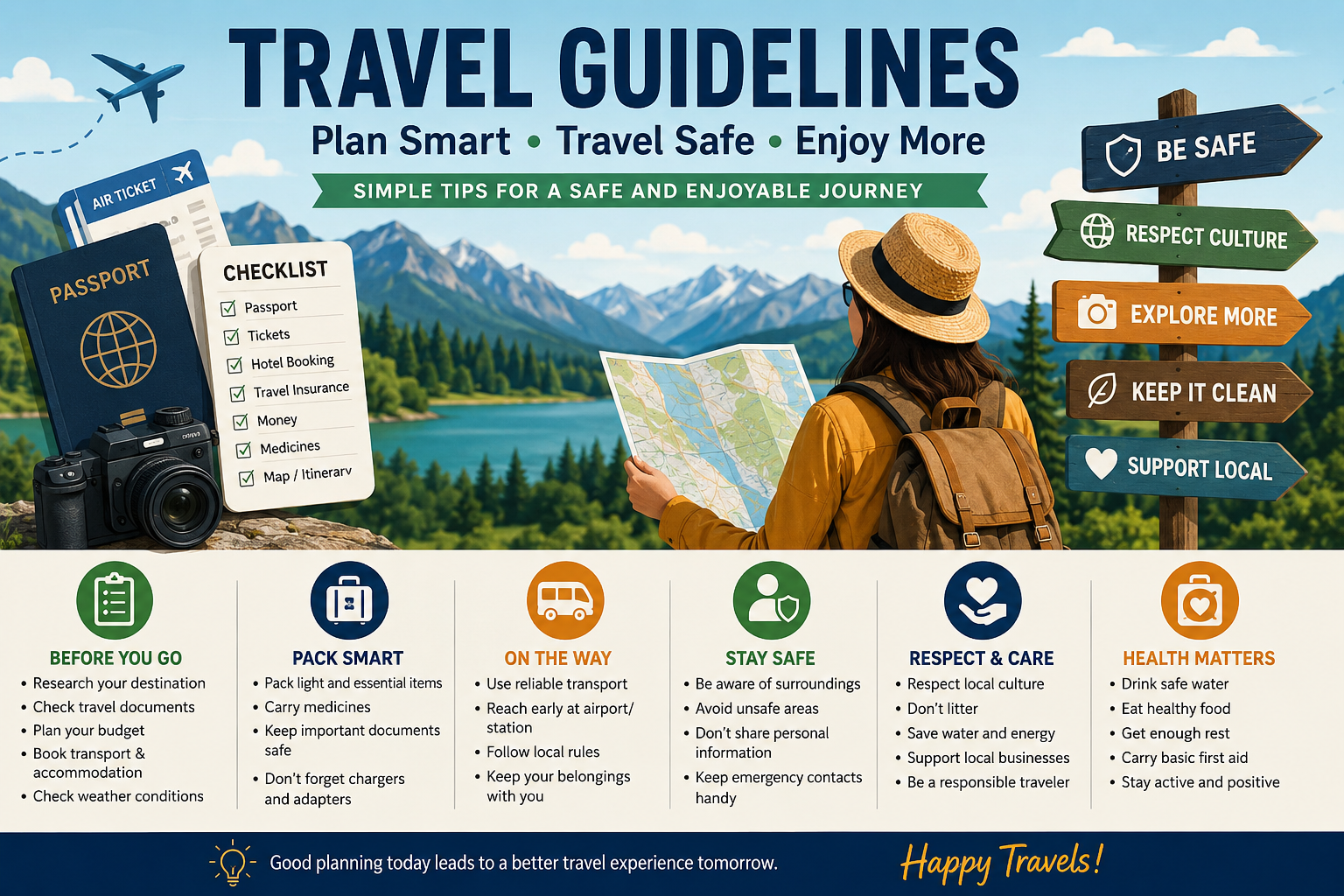
Traveling can be exciting, relaxing, educational, and memorable. Whether you are planning a short local trip, an international holiday, a family vacation, or a solo adventure, good preparation can make a major difference. The right travel guidelines can help you avoid common problems, protect your belongings, manage your money, and enjoy your destination with greater confidence. Travel guidelines are not only about safety. They also include planning your transportation, choosing suitable accommodation, checking documents, preparing your luggage, understanding local culture, managing your budget, and taking care of your health. A well-prepared traveler can enjoy more of the journey because there is less stress about unexpected problems Travel Aware
Why Travel Guidelines Are Important
Travel guidelines provide a simple way to prepare for a journey. They help travelers think about important details before they become problems.
Without proper preparation, a traveler may face issues such as:
- Missing travel documents
- Unexpected expenses
- Poor accommodation
- Transportation delays
- Lost luggage
- Unsafe areas
- Communication difficulties
- Food or water problems
- Cultural misunderstandings
- Medical emergencies
Good travel guidelines do not guarantee that everything will go perfectly. Travel can always involve unexpected situations. Instead, travel guidelines help you prepare for common situations and respond calmly when something changes.
A good traveler should aim for a balance between preparation and flexibility. Planning is important, but there should also be enough free time to deal with delays, weather changes, or unexpected opportunities.
Research Your Destination Before Traveling
One of the most important travel guidelines is to research your destination before you leave.
Do not depend only on photographs or short travel videos. Learn practical information that can affect your journey.
Research the following:
- Local weather
- Best travel season
- Entry requirements
- Visa rules
- Local laws
- Currency
- Transportation
- Accommodation areas
- Common tourist problems
- Local customs
- Food and water conditions
- Medical facilities
- Emergency services
- Major tourist attractions
Weather is especially important. A destination can look completely different depending on the season. Heavy rain, extreme heat, snow, storms, or strong winds can affect transportation and outdoor activities.
It is also useful to learn a little about the local culture. Understanding basic customs can prevent uncomfortable situations and help you show respect to local people.
Check Your Travel Documents
Travel documents are among the most important things a tourist needs.
Before traveling, check all documents carefully. Do not wait until the day of departure.
Depending on the destination, you may need:
| Document | Why It May Be Needed |
|---|---|
| Passport | Main identification document for international travel |
| Visa | Required by some countries before entry |
| Identity card | Useful for identification in some destinations |
| Flight ticket | Proof of your travel booking |
| Hotel reservation | May be useful during check-in or border procedures |
| Travel insurance | Provides protection for covered travel problems |
| Driving license | Needed if you plan to drive |
| Medical documents | Useful when traveling with specific medical needs |
| Emergency contacts | Helpful during unexpected situations |
Check your passport’s expiration date well before traveling. Some destinations require travelers to have several months of passport validity remaining.
Keep your original documents secure. It is also wise to keep digital copies in a secure location and, when appropriate, carry separate paper copies.
Never send copies of sensitive documents to unknown people or untrusted websites.
Create a Realistic Travel Budget
Money is another major part of good travel guidelines.
A travel budget should include more than the cost of a flight or hotel. Many small expenses can add up during a trip.
Consider these expenses:
- Flights or other transportation
- Hotel or accommodation
- Food
- Local transportation
- Tourist attractions
- Tours
- Shopping
- Communication
- Travel insurance
- Airport transportation
- Taxes and service fees
- Emergency expenses
A simple budget can be organized like this:
| Travel Expense | What to Consider |
|---|---|
| Transportation | Flights, trains, buses, taxis, fuel |
| Accommodation | Hotel, apartment, hostel, resort |
| Food | Restaurants, groceries, snacks |
| Activities | Tours, museums, attractions |
| Shopping | Gifts and personal purchases |
| Communication | SIM card, mobile data, Wi-Fi |
| Insurance | Travel protection |
| Emergency Fund | Unexpected costs |
Always keep an emergency amount separate from your normal daily spending.
A traveler who spends the entire budget during the first few days may have difficulty if an unexpected expense appears later.
Plan Your Transportation Carefully
Transportation is an important part of travel guidelines because delays and poor planning can affect the entire trip.
When booking a flight, train, or bus, compare more than the basic ticket price.
Look at:
- Departure time
- Arrival time
- Baggage allowance
- Connection time
- Cancellation rules
- Change fees
- Airport or station location
- Total travel time
A cheap ticket may not always be the cheapest overall option. For example, a flight arriving far from the city may require expensive transportation to reach the hotel.
If you have a connecting flight or train, allow enough time between connections. Very short connection times can create problems when the first service is delayed.
For local travel, research transportation before arrival. Understand whether the destination has buses, trains, metro services, taxis, ride services, or rental vehicles.
Choose Safe and Suitable Accommodation
Accommodation can strongly affect the travel experience.
A hotel may look affordable, but its location and conditions should also be considered.
Before booking accommodation, check:
- Location
- Safety
- Cleanliness
- Reviews
- Transportation access
- Price
- Check-in time
- Check-out time
- Cancellation policy
- Included services
- Room conditions
Location is especially important.
An accommodation that costs slightly more but is close to public transportation and major attractions may save money on daily transportation.
Do not choose accommodation based only on photographs. Read recent guest reviews and pay attention to repeated complaints.
Follow Smart Packing Guidelines
Packing should be based on the destination, weather, trip length, and planned activities.
A traveler should avoid carrying unnecessary items because heavy luggage can make the journey difficult.
Useful items may include:
- Passport
- Visa documents
- Identification
- Travel tickets
- Money
- Payment cards
- Phone
- Charger
- Power bank
- Comfortable clothing
- Weather-appropriate clothing
- Comfortable shoes
- Toiletries
- Personal medicines
- Basic first-aid supplies
- Travel insurance information
Keep valuable and important items in your carry-on luggage when possible.
Do not put your passport, money, important medication, or essential electronics in checked luggage if you can avoid it.
Before leaving home, check the baggage rules of your transportation provider. Different airlines and travel services can have different restrictions.
Keep Important Documents Secure
A passport can be one of the most valuable items during international travel.
Keep it in a secure place and avoid leaving it unattended.
It is also useful to keep copies of:
- Passport information page
- Visa
- Travel insurance
- Flight tickets
- Hotel reservations
- Important contact information
Digital copies should be stored securely. Avoid using public or shared devices to access sensitive documents.
If a passport is lost or stolen, contact the appropriate authorities and your country’s diplomatic mission as soon as possible.
Travel Safety Guidelines
Safety should be part of every trip, whether you are traveling for one day or several weeks.
Some basic travel safety guidelines include:
- Stay aware of your surroundings.
- Keep valuable items secure.
- Avoid displaying large amounts of cash.
- Use reliable transportation.
- Be careful in crowded areas.
- Avoid unfamiliar isolated areas, especially at night.
- Keep emergency contacts available.
- Tell someone you trust about your travel plans.
- Follow local laws.
- Avoid unnecessary arguments or conflicts.
Tourists can sometimes attract unwanted attention because they are unfamiliar with the local area.
Do not assume that every destination is dangerous, but do not ignore reasonable safety precautions either.
If something feels unsafe, leave the situation and seek help from a reliable source.
Protect Your Money While Traveling
Money management is another important part of travel guidelines.
Do not depend on only one payment method.
A traveler may carry:
- Some local cash
- A debit or credit card
- A backup payment card
- Emergency funds
Avoid keeping all your money in one location.
When using an ATM, choose a secure location and be careful about people nearby. Check the machine for anything unusual before using it.
Monitor your bank account during the trip so you can quickly notice unfamiliar transactions.
If you exchange currency, use trusted and authorized exchange services rather than unknown individuals.
Health and Wellness Travel Guidelines
Taking care of your health while traveling is essential.
Changes in weather, food, water, sleep schedules, and daily routines can affect the body.
Before traveling, consider:
- Your general health needs
- Necessary medicines
- Travel insurance
- Local medical facilities
- Food and water conditions
- Weather conditions
- Planned physical activities
Carry medicines in their original packaging when appropriate and keep important medical information available.
Drink safe water. In places where tap water is not considered safe for visitors, use properly sealed bottled water or another reliable source.
Food safety is also important. Be careful with food that appears poorly stored or prepared.
Food and Water Safety
Trying local food is one of the best parts of traveling, but food safety should not be ignored.
Useful guidelines include:
- Choose clean and busy restaurants.
- Check that food is properly cooked.
- Be careful with raw foods in places where sanitation is uncertain.
- Drink safe water.
- Wash your hands before eating.
- Store food properly.
- Be careful with unfamiliar ingredients if you have allergies.
Travelers with food allergies should clearly communicate their needs when ordering food.
If you are unsure about an ingredient, ask before eating it.
Respect Local Culture and Customs Travel guidelines
Travel is an opportunity to learn about different people and cultures.
One of the most important travel guidelines is to respect local customs even when they are different from your own.
Before traveling, learn about:
- Appropriate clothing
- Greetings
- Religious customs
- Photography rules
- Public behavior
- Dining traditions
- Social expectations
- Rules at historical sites
Some religious or cultural locations may require specific clothing or behavior.
Always follow posted instructions.
Do not assume that something acceptable in your home country is automatically acceptable everywhere else.
Respectful behavior can make your experience better and create positive interactions with local people.
Responsible Travel guidelines
Tourism affects local communities and the environment. Responsible tourism means enjoying a destination without causing unnecessary harm.
A responsible traveler should:
- Avoid littering.
- Use waste bins.
- Reduce unnecessary plastic use.
- Respect wildlife.
- Avoid damaging plants.
- Stay on marked paths where required.
- Respect historical buildings.
- Avoid removing natural objects from protected areas.
- Support local businesses.
- Treat local workers respectfully.
Do not feed wild animals unless it is specifically allowed by responsible authorities or conservation programs.
Do not touch or damage historical structures.
Small actions can make a major difference when millions of tourists visit popular destinations every year.
Technology and Travel guidelines
Modern technology makes travel easier, but travelers should use it carefully.
Useful travel technology includes:
- Digital maps
- Translation applications
- Airline applications
- Hotel applications
- Weather services
- Online banking
- Digital tickets
- Travel planning tools
- Emergency contact tools
Download important information before traveling if possible.
Internet access may not always be available. Offline maps can be useful when traveling through unfamiliar areas.
Keep your phone charged and carry a power bank when appropriate.
Avoid connecting to unknown public networks for sensitive banking activities.
Communication Travel guidelines
Language differences can sometimes create challenges.
You do not need to become fluent in the local language before traveling, but learning a few basic words can help.
Useful words and phrases may include:
- Hello
- Thank you
- Please
- Excuse me
- Help
- Where is…?
- How much?
- I do not understand
- Do you speak English?
Translation tools can also help.
When communication becomes difficult, remain patient. Speaking louder does not usually solve a language problem.
Use simple words, gestures, maps, or translation tools when appropriate.
Guidelines for Solo Travelers Travel guidelines
Solo travel can be rewarding because you can choose your own schedule and make independent decisions.
However, solo travelers should take extra precautions.
Before leaving:
- Share your basic itinerary with someone you trust.
- Research accommodation carefully.
- Save important phone numbers.
- Learn about local transportation.
- Keep copies of important documents.
- Carry a charged phone.
- Have backup payment methods.
During the trip:
- Avoid unnecessary risks.
- Be careful about accepting help from strangers.
- Avoid isolated places when you do not know the area.
- Keep people informed when making major changes to your plans.
- Trust your judgment.
Solo travel should provide freedom, not unnecessary danger.
Guidelines for Family Travel
Traveling with children requires more preparation than traveling alone.
Families should consider everyone’s needs when planning.
Important family travel guidelines include:
- Keep children’s documents secure.
- Choose suitable accommodation.
- Plan regular rest periods.
- Carry necessary medicines.
- Pack snacks when appropriate.
- Consider children’s meal needs.
- Choose age-appropriate activities.
- Avoid overly busy schedules.
- Keep children close in crowded areas.
Children may become tired or uncomfortable more quickly than adults.
A flexible schedule can make a family trip more enjoyable.
Older Travelers Travel guidelines
Older travelers may need additional planning depending on their individual needs.
Consider:
- Easy access to transportation
- Comfortable accommodation
- Nearby medical facilities
- Reasonable walking distances
- Weather conditions
- Necessary medicines
- Rest periods
Do not create an itinerary that requires too much physical activity without enough time for recovery.
Comfort and safety should be more important than trying to visit every attraction.
What to Do When Travel Problems Happen Travel guidelines
Even the best travel guidelines cannot prevent every problem.
Travelers may face:
- Flight delays
- Canceled transportation
- Lost luggage
- Lost documents
- Hotel problems
- Bad weather
- Medical emergencies
- Language barriers
- Unexpected costs
The first step is to remain calm.
Then identify the problem and find the correct person or organization to contact.
| Problem | First Action Travel guidelines |
|---|---|
| Flight delay | Contact the airline or transportation provider |
| Lost luggage | Report it to the baggage service |
| Lost passport | Contact local authorities and your diplomatic mission |
| Hotel problem | Speak with hotel management |
| Medical issue | Seek appropriate medical assistance |
| Lost phone | Secure accounts and contact your service provider |
| Payment problem | Contact your bank or card provider |
| Language problem | Use translation tools or seek reliable assistance |
Keep important booking confirmations and contact information available so you can act quickly.
Guidelines for Driving During Travel
Some travelers prefer renting a car or driving their own vehicle.
Before driving in another country or region, learn about:
- Driving side
- Local traffic laws
- Speed limits
- Parking rules
- Road conditions
- License requirements
- Insurance requirements
- Toll roads
- Fuel costs
Do not assume that driving rules are the same everywhere.
If you are tired, do not drive. If local road conditions are difficult, consider using professional transportation instead.
Guidelines for Photography Travel guidelines
Photography is an important part of modern tourism.
However, tourists should think before taking photographs.
Ask permission when photographing people in situations where privacy or consent matters.
Pay attention to signs that prohibit photography.
Be especially respectful in:
- Religious places
- Military areas
- Government buildings
- Private property
- Sensitive cultural locations
A photograph is never more important than someone’s privacy or safety.
Before Leaving for the Airport or Station Travel guidelines
A final check can prevent unnecessary stress.
Before leaving your accommodation, check:
- Passport
- Wallet
- Phone
- Charger
- Tickets
- Travel documents
- Medicines
- Luggage
- Keys
- Important belongings
Check your departure time and transportation route.
Leave enough time for traffic, security checks, baggage procedures, and unexpected delays.
Before Returning Home Travel guidelines
Travel guidelines also apply to the journey home.
Before departure, check:
- Flight or transportation time
- Passport
- Tickets
- Baggage
- Hotel charges
- Personal belongings
- Customs requirements
- Important receipts
- Travel documents
Walk through your hotel room carefully before checking out.
It is easy to forget small items such as chargers, watches, documents, or clothing.
A Simple Travel Preparation Checklist Travel guidelines
Use this basic checklist before a trip:
- Research the destination.
- Check passport validity.
- Check visa requirements.
- Book transportation.
- Book suitable accommodation.
- Create a travel budget.
- Arrange travel insurance if appropriate.
- Prepare important documents.
- Pack suitable clothing.
- Pack necessary medicines.
- Charge electronic devices.
- Download useful travel applications.
- Save emergency contacts.
- Share your itinerary with someone you trust.
- Check the weather.
- Travel guidelinesConfirm departure times.
How to Make Travel More Enjoyable Travel guidelines
Travel guidelines are not meant to make a trip stressful. Their purpose is to make travel easier.
Do not try to control every small detail.
Leave room for:
- Rest
- Local exploration
- Unexpected activities
- Weather changes
- Delays
- Meeting new people
- Trying local food
Some of the best travel memories happen when a traveler discovers something that was not included in the original plan.
Take photographs, but also put the phone away sometimes and experience the destination directly.
Talk to people respectfully. Walk through local areas. Try new experiences when they are safe and appropriate.
FAQs
What are the most important travel guidelines?
The most important travel guidelines include researching your destination, checking travel documents, preparing a budget, arranging safe transportation, choosing suitable accommodation, protecting valuables, carrying essential items, and understanding local laws and customs.
What should I check before traveling?
Before traveling, check your passport validity, visa requirements, weather, transportation, accommodation, travel insurance, local laws, currency, health information, and emergency contacts.
How can I stay safe while traveling?
Stay aware of your surroundings, protect your passport and money, use reliable transportation, avoid unsafe areas, keep your phone charged, follow local laws, and share your basic travel plans with someone you trust.
What documents should I carry when traveling?
Depending on your destination, you may need a passport, visa, identification, tickets, accommodation information, travel insurance details, driving documents, and other required paperwork.
How can I protect my money during travel?
Use more than one payment method, keep emergency funds separate, avoid carrying large amounts of cash, protect your payment cards, use secure ATMs, and monitor your financial accounts.
What should I pack for a trip?
Pack according to your destination and activities. Common essentials include travel documents, clothing, comfortable shoes, toiletries, medicines, a phone, charger, power bank, money, payment cards, and important contact information.
How can tourists respect local culture?
Learn basic local customs, follow local rules, dress appropriately when required, respect religious and historical places, ask before photographing people, and communicate with local residents politely.
Why is travel insurance important?
Travel insurance can provide protection for certain unexpected travel problems, depending on the policy. Coverage may include specific medical, cancellation, baggage, or other travel-related situations.
What should I do if I lose my passport while traveling?
If you lose your passport, report the loss to the appropriate local authorities and contact your country’s diplomatic mission or consular service. Keep copies of your passport and other documents to make the process easier.
How can I travel safely with children?
Prepare children’s documents, choose suitable accommodation, plan rest periods, carry necessary medicines and food items, keep children close in crowded areas, and choose activities that are suitable for their age.
Is it important to research local laws before traveling?
Yes. Local laws can differ significantly between destinations. Travelers should understand important rules before arrival and follow them throughout the trip.
How can I avoid common travel problems?
Research carefully, arrive early for transportation, keep important documents secure, maintain an emergency fund, check weather conditions, confirm bookings, and keep backup copies of important information.
What is responsible tourism?
Responsible tourism means traveling in a way that respects local people, culture, wildlife, historical places, and the environment. It includes avoiding litter, supporting local businesses, and following rules designed to protect destinations.
Should I plan every activity before traveling?
It is useful to plan important activities, but you do not need to schedule every minute. Leaving some free time allows you to rest, explore naturally, and handle unexpected changes.
What is the best way to enjoy a trip?
Prepare well, remain flexible, respect the destination, stay safe, manage your money carefully, and take time to experience the local culture. A successful trip is not only about visiting many places but also about enjoying the journey.
Conclusion
Travel guidelines are useful for every type of traveler. Whether you are taking a short trip, planning a family holiday, traveling alone, or visiting another country, preparation can reduce stress and improve the overall experience. The most important travel guidelines include researching the destination, checking travel documents, creating a realistic budget, planning transportation, choosing suitable accommodation, packing carefully, protecting money and personal belongings, and following basic safety practices. Health should also be considered. Safe food, clean water, proper rest, necessary medicines, and access to medical assistance can make a major difference during a trip.